

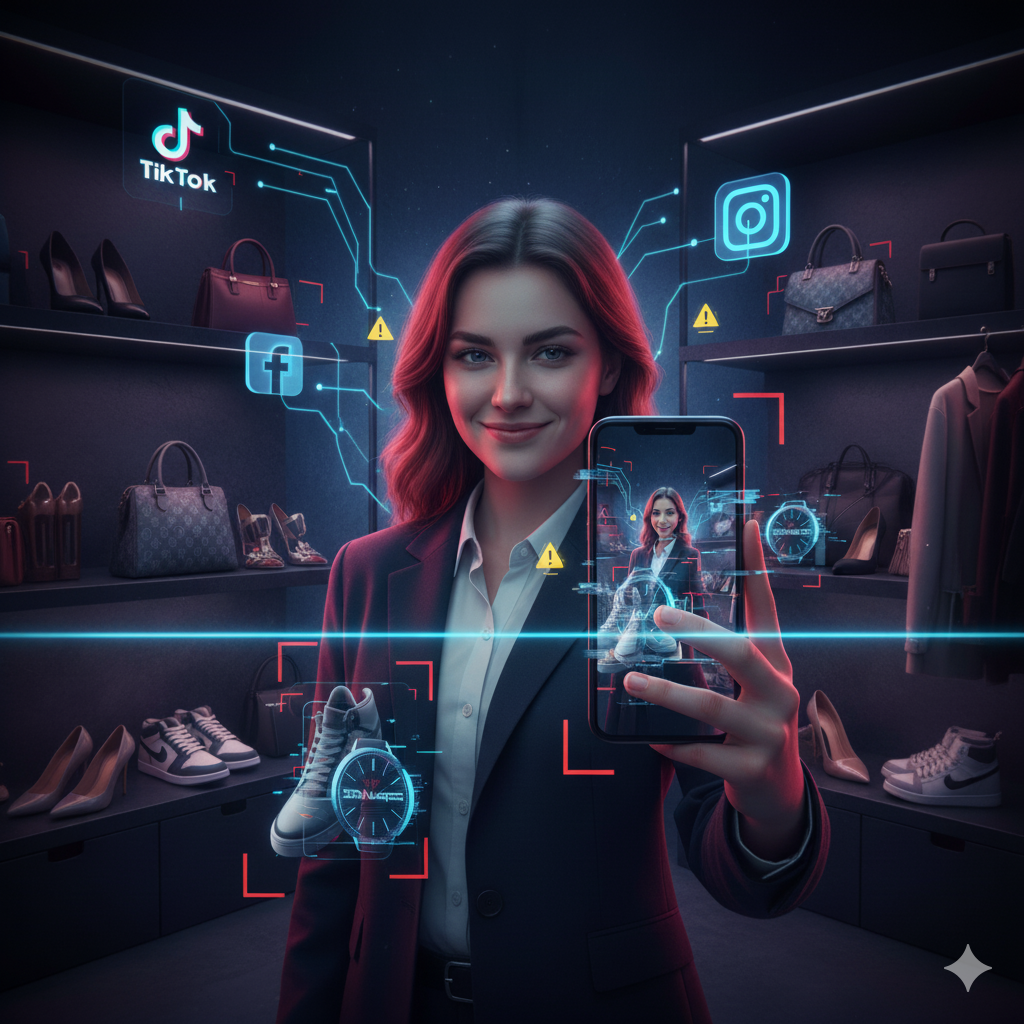
The Rise of Social Commerce and Hidden Counterfeits
Platforms like TikTok Shop, Instagram Store, and Facebook Marketplace have transformed global e-commerce, turning social feeds into marketplaces. Millions of small sellers and influencers now drive sales directly through posts, stories, and live videos. Yet, this convenience comes with a hidden cost — the rapid growth of counterfeit activity within influencer and social-shop ecosystems.
According to recent studies, over 23% of counterfeit products are now sold directly through social media, compared to less than 10% just two years ago. This dramatic increase reflects how counterfeiters exploit the very foundation of influencer marketing — trust. When consumers see a product link shared by an influencer they admire, they rarely suspect it might lead to a fake.
How Counterfeiters Exploit Influencer Trust
Micro-influencers (typically between 10,000 and 100,000 followers) are highly trusted voices within niche communities. Their recommendations often feel personal, authentic, and credible — which is exactly why counterfeiters target them.
Some are deceived into promoting imitation products, while others knowingly partner with unauthorized sellers for commission-based deals.
The result is a fast-moving counterfeit network that spreads across story mentions, affiliate links, and look-alike brand pages.
Each fake listing harms the original brand in multiple ways:
- Eroding consumer confidence through poor-quality imitations.
- Redirecting legitimate traffic away from verified e-commerce channels.
- Triggering legal and reputational risks for both brands and platforms.
The Regulatory Response and Its Limitations
The EU Digital Services Act (DSA) now obliges social media platforms to take stronger action against counterfeit goods and repeat offenders. Yet, with billions of posts uploaded daily, manual moderation simply can’t keep up.
Counterfeiters continuously evolve — using slightly altered logos, AI-generated visuals, and deceptive product titles to avoid detection.
The only scalable solution is AI-driven monitoring: systems capable of detecting visual and linguistic anomalies at scale, across every major social and marketplace platform.
How Counterfake Detects Brand Misuse Across Social Channels
Counterfake’s AI architecture — combining Search AI and Fake Detection AI — monitors social media and social-shop ecosystems 24/7.
It identifies risks by analyzing a combination of visual and textual signals:
- Visual analysis: logo position, design pattern, color palette, and packaging details.
- Textual analysis: brand name variations, inconsistent pricing, misleading descriptions.
- Source validation: domain reliability, seller history, and location metadata.
Once high-risk content is flagged, brands receive instant alerts and evidence packages to accelerate takedown or enforcement actions. This continuous surveillance not only prevents direct sales losses but also safeguards consumer trust.
Building a Safer Influencer Ecosystem
Technology alone cannot solve the problem. Brands must establish clear frameworks with their influencer partners and marketing agencies.
Recommended actions include:
- Embedding counterfeit-risk checks in content approval workflows.
- Using social listening tools to track brand mentions and suspicious URLs.
- Partnering with platforms to streamline counterfeit reporting protocols.
- Educating influencers on how to identify fake collaborations or brand impersonations.
When these measures are paired with AI-powered detection, brands can transform influencer marketing into a secure and transparent channel for growth.
Protecting Trust in the Age of Social Commerce
Micro-influencer marketing remains one of the most effective ways to reach modern consumers — but its success depends on protecting authenticity.
Counterfeiters are adapting faster than ever, blending into legitimate creator economies and exploiting algorithmic exposure.
With proactive, AI-driven brand protection, companies can restore trust and ensure that every post, tag, and link reflects their true identity.
Counterfake empowers brands to stay one step ahead, keeping digital marketplaces — and social feeds — safe from counterfeits.