

Executive Summary
The landscape of the beauty industry is shifting from "Trademark Infringement" to "Public Health Bio-Security." In 2026, the proliferation of fake makeup is no longer just a revenue leak; it is a significant biological threat containing heavy metals and pathogens. This post explores how global marketplace monitoring is evolving through brand protection AI to identify toxic threats before they reach the consumer's skin, shifting the focus from protecting logos to protecting lives.
--
The sophistication of counterfeit cosmetics has reached a tipping point where physical inspection is no longer enough. To survive in 2026, brands must deploy "Bio-Digital" defenses.
Pillar 1: The Bio-Hazardous Reality of Fake Makeup
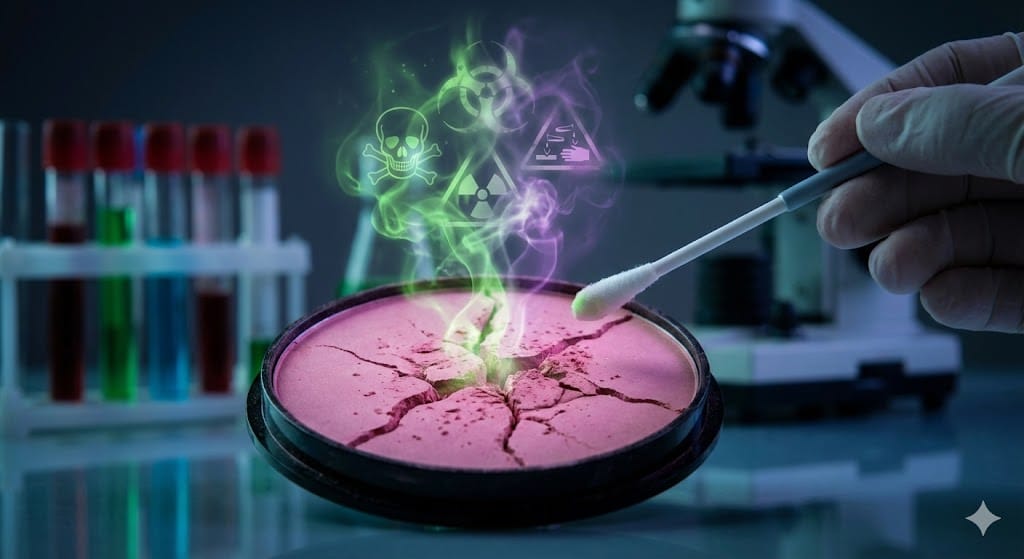
While "Clean Beauty" dominates legitimate retail, the shadow market for fake makeup is a laboratory of toxins. Lab reports in 2026 continue to find lead, arsenic, and mercury in unauthorized "superfakes." For a brand, the risk is clear: your reputation is tied to a formula you didn't create. Modern brand protection must now treat every counterfeit listing as a potential product liability lawsuit.
Pillar 2: Price-Risk Correlation as a Safety Sentry
Traditional global marketplace monitoring focuses on visual logo matches. However, Counterfake’s AI goes deeper by analyzing the "Economic Feasibility" of a product. If a premium, clinically-tested serum is listed at a 90% discount, our algorithms flag it as a "High Health Risk." This predictive modeling identifies counterfeit cosmetics based on the impossibility of their price-to-ingredient ratio, serving as an autonomous bio-security filter.
Pillar 3: Real-Time Detection in the Social Selling Era
With the rise of "viral" sales on social platforms, the velocity of fake makeup distribution is faster than any human legal team can track. By utilizing multi-agent AI, Counterfake monitors live streams and "Story" content in real-time. This ensures that brand protection is active at the exact moment a consumer is most vulnerable to a misleading "dupe" that is actually a dangerous counterfeit.
The Paradigm Shift
We are moving from a "Whack-a-Mole" enforcement model to a Consumer Safety First strategy. In the 2026 landscape, the most successful beauty brands will not view global marketplace monitoring as a legal expense, but as a critical component of their ESG and customer trust framework. When you remove a toxic fake, you aren't just saving a sale—you are saving a customer.
References:
- World Health Organization (WHO) – The Rising Impact of Counterfeit Chemicals in Global Skin Care (2026 Report)
- Cosmetics Design – AI and the Future of Formulation Integrity in E-Commerce
- WIPO – Automated Enforcement: Protecting IP in the Age of Social Commerce