

Executive Summary
Amazon has become the indispensable digital storefront for global brands, yet its open-marketplace architecture has birthed a systemic threat: the unauthorized seller. These entities, operating outside of official distribution agreements, do more than just siphon sales; they trigger a cascade of brand erosion, price instability, and customer dissatisfaction. This article explores the macroeconomic impact of unauthorized Amazon activity in 2026, why traditional Minimum Advertised Price (MAP) enforcement is failing, and the necessity of moving toward AI-driven Brand Protection. For enterprise leaders, understanding that Amazon Brand Registry is merely a baseline—not a complete solution—is the first step toward reclaiming channel integrity and ensuring long-term Revenue Recovery.
The "Everything Store" and the Zero-Sum Game of Distribution
In 2026, Amazon’s dominance as a product search engine is absolute. For a B2B or B2C hardware giant, being absent from the platform is not an option. However, the very features that make Amazon efficient—the unified Buy Box, easy third-party onboarding, and global fulfillment—are the exact tools utilized by unauthorized sellers to dismantle a brand’s carefully constructed market position.
The "Amazon Paradox" is simple: as your brand’s popularity grows on the platform, so does its attractiveness to "grey market" sellers. These are not necessarily counterfeiters in the legal sense, but rather unauthorized entities selling genuine products obtained through diverted supply chains, liquidations, or international price arbitrage. While the product may be real, the damage to the brand is profound.
The Hidden Cost of the Buy Box: Losing the Price War
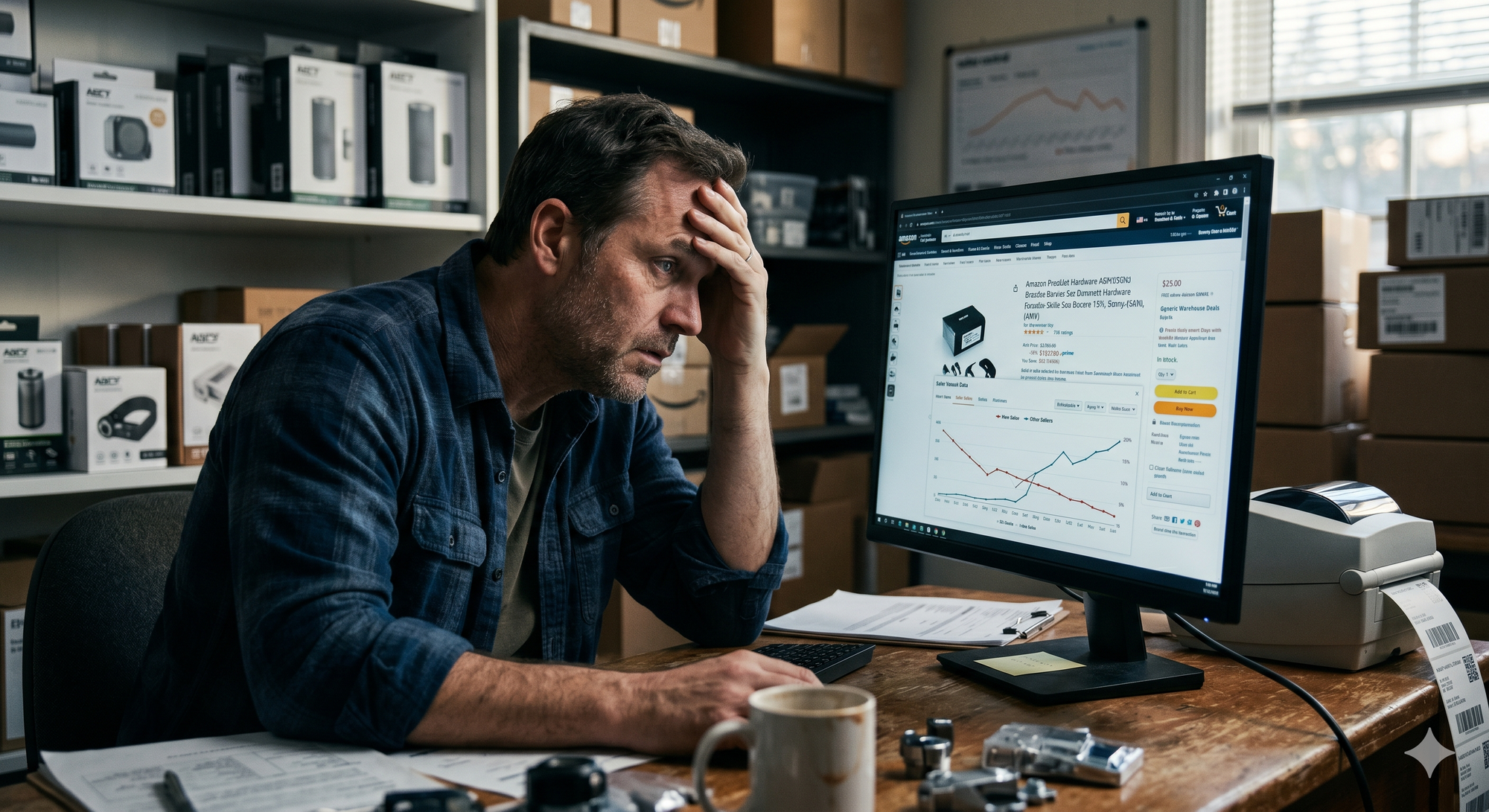
On Amazon, the "Buy Box" is the ultimate prize, accounting for over 82% of all sales. Unauthorized sellers often win this spot by undercutting the official price by small margins. For a brand, this creates a "race to the bottom" that destroys the perceived value of the product.
The Death of Channel Integrity
When an unauthorized seller breaks your Minimum Advertised Price (MAP) on Amazon, it creates a "domino effect" across your entire retail network. Your authorized brick-and-mortar partners and official distributors see the lower price online and demand credits or threaten to drop your line. What began as a single unauthorized listing on Amazon can quickly evolve into a full-scale revolt within your traditional sales channels.
The Trust Gap and Customer Churn
Unauthorized sellers rarely adhere to a brand’s customer service standards. They may sell older versions of products, items with damaged packaging, or products intended for different geographical regions (lacking local warranties). When the customer receives a sub-standard experience, their frustration is directed at the brand, not the third-party seller.
How do unauthorized sellers on Amazon harm brand equity?
Unauthorized sellers harm brand equity by triggering price erosion through MAP violations, creating channel conflict with authorized distributors, and providing sub-standard customer service. This results in negative product reviews, a "race to the bottom" in pricing, and a loss of consumer trust in the brand's premium positioning.
The Brand Registry Myth: Why Trademarks Are Not Enough
Many enterprise leaders believe that enrolling in Amazon Brand Registry is the end of their brand protection journey. This is a dangerous misconception. Brand Registry is designed to protect Intellectual Property (IP)—specifically trademarks, patents, and copyrights. It is highly effective against blatant counterfeits, but it is virtually powerless against unauthorized sellers of genuine goods.
Amazon’s "First Sale Doctrine" protections often mean that, as long as a seller has a legitimate product, Amazon will not remove it simply because the seller is not an "authorized" dealer. To manage unauthorized sellers, brands must move beyond legal complaints and toward a strategy of Market Sovereignty.
The Economic Impact: The Trillion-Dollar Leakage
The scale of unauthorized trade is staggering. As we reach the midpoint of 2026, the data highlights a growing crisis in marketplace control:
- $250 Billion: The estimated annual revenue lost by brands to unauthorized "grey market" sellers on major marketplaces globally.
- 15-20%: The average price erosion seen in high-growth tech categories when more than five unauthorized sellers are present on a single ASIN.
- 60%: The percentage of authorized distributors who report "channel conflict" as their primary concern when dealing with hardware manufacturers.
- 48%: The increase in "cross-border arbitrage," where products intended for lower-priced regions are diverted back to high-income markets via Amazon.
These figures illustrate that the "Amazon problem" is not a minor nuisance—it is a direct threat to a company’s EBITDA.
Can Amazon Brand Registry stop unauthorized sellers?
No, Amazon Brand Registry is primarily a tool for IP enforcement (counterfeits and trademark abuse). It does not prevent the sale of genuine products by unauthorized sellers. Controlling unauthorized sellers requires specialized distribution monitoring and AI-driven platforms that track supply chain leaks and enforce MAP compliance.
Transitioning from Defense to Revenue Recovery
In the 2026 digital economy, successful brands have stopped playing "Whack-a-Mole" with individual sellers. Instead, they are focusing on Revenue Recovery. This means identifying the source of the leakage rather than just treating the symptom on the screen.
Traditional manual monitoring might identify the seller's name (which is often a shell company), but it won't find the distributor who sold to them. This is where AI-driven intelligence becomes mandatory. By analyzing pricing patterns, stock levels, and historical data across millions of listings, brands can triangulate the "Source Nodes" of their unauthorized inventory.
Beyond Takedowns: Reclaiming Market Sovereignty
The challenge of unauthorized sellers on Amazon is a symptom of a larger issue: the loss of control over the digital narrative. For a global brand, maintaining this control is essential for protecting the high R&D costs and premium positioning of its products.
The solution is a multi-layered approach that combines:
- Strict Distribution Agreements: Clear legal language that prohibits resale on third-party marketplaces.
- Automated Monitoring: AI-driven tools that track MAP violations and seller activity 24/7.
- Data-Driven Enforcement: Moving from manual "test buys" to algorithmic supply chain forensics.
By reclaiming control over the Amazon marketplace, brands do more than just protect a single channel; they secure their entire global distribution strategy.
What is the ROI of controlling unauthorized sellers on Amazon?
The ROI is measured in three ways:
1) Direct Sales Recovery by winning back the Buy Box,
2) Price Integrity by preventing MAP violations that lead to broader market price erosion, and
3) Channel Harmony, which ensures authorized partners remain profitable and loyal to the brand.
Reclaiming the Buy Box
Amazon is a tool for growth, but without proper oversight, it can become a tool for brand destruction. The unauthorized seller thrives in the gaps left by manual processes and legacy legal strategies. In the age of AI and decentralized commerce, the only way to protect your brand is to be faster, smarter, and more data-driven than the sellers who seek to exploit your success.
Is your brand currently losing the Amazon price war?
The time to reclaim your market sovereignty is now. Let’s turn the Amazon Paradox into an Amazon Advantage.
Resources
- Amazon Brand Services. (2025). The State of Marketplace Integrity and IP Protection.
- Harvard Business Review. (2026). The Grey Market Challenge: Strategy in the Age of Global Arbitrage.
- International Journal of Electronic Commerce. (2025). Algorithmic Pricing and its Impact on Brand Loyalty.
- Shao, Y. (2026). The Architecture of Unauthorized Distribution in B2B SaaS and Hardware. Journal of Digital Commerce.
- OECD/EUIPO. (2026). The Economic Impact of Counterfeiting and Illicit Trade on Global Marketplaces.