

Executive Summary
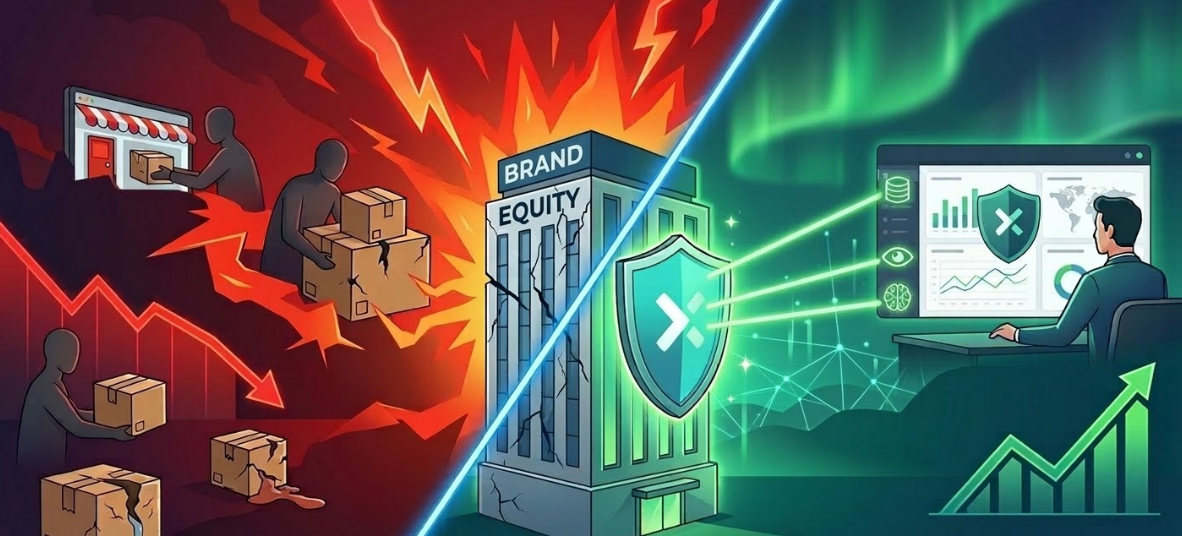
The digital age has brought unprecedented growth to e-commerce, but it has also unleashed a hidden threat to long-term profitability: unauthorized sellers. Far from being a minor nuisance, these rogue merchants actively damage brand equity by triggering severe channel conflict and relentless pricing erosion. When unauthorized sellers flood online marketplaces with discounted, diverted, or counterfeit products, they undermine the investments of legitimate distribution partners and dilute the perceived value of your brand. In this post, we analyze the mechanics behind this new channel war, exploring how unchecked unauthorized sales degrade consumer trust and why proactive, AI-driven enforcement is essential to restoring market control and safeguarding your brand’s bottom line.
--
How Does Pricing Erosion Destroy Brand Value?
One of the most immediate and visible impacts of unauthorized sellers is pricing erosion. These rogue actors typically obtain products through gray market diversion, liquidations, or illicit networks, allowing them to bypass the costs associated with authorized distribution, marketing, and customer service. Consequently, they frequently list products well below Minimum Advertised Price (MAP) guidelines.
Research highlights the severity of this issue; market data indicates that up to 50% of unauthorized retailers routinely breach MAP policies. When consumers see a premium product heavily discounted by a third-party seller, an algorithmic domino effect begins:
- Algorithmic Price Matching: Major online marketplaces use automated pricing algorithms. When an unauthorized seller drops the price, legitimate retailers are often forced by the platform's algorithm to match it, immediately shrinking margins.
- Loss of the Buy Box: Brands and authorized sellers frequently lose the crucial "Buy Box" to unauthorized sellers competing purely on price, resulting in massive revenue leakage.
- Perceived Value Dilution: If your product is consistently available at a 30% discount, consumers will recalibrate their expectations. The discounted price becomes the new normal, permanently eroding your brand's premium positioning.
Why Do Unauthorized Sellers Cause Channel Conflict?
Pricing erosion doesn't happen in a vacuum—it directly fuels channel conflict. Authorized distributors and retailers invest heavily in your brand. They train their staff, maintain high-quality visual merchandising, and provide exceptional customer service.
When unauthorized sellers undercut these authorized partners without bearing any of the overhead costs, it creates an uneven playing field. The consequences of this channel conflict are severe:
- Retailer Churn: Frustrated by shrinking margins and unfair competition, top-tier retail partners may reduce their inventory of your products or drop your brand entirely in favor of competitors who strictly enforce their distribution channels.
- Reduced Marketing Support: Why would an authorized retailer spend advertising dollars on your product if the consumer is just going to purchase it from a cheaper, unauthorized seller on a marketplace?
- Strained Relationships: The burden of policing unauthorized sales often falls back on the brand, leading to tense negotiations and a breakdown of trust with key distribution partners.
As noted by the Marketing Science Institute, the explosion of web-based buying alternatives has triggered a "new channel war," where confronting anonymous third parties in competition with trusted partners requires a highly systematic battle plan (Jap, Gibson, & Zmuda, 2021).
What Are the Hidden Costs to Consumer Trust?
Beyond immediate financial losses, unauthorized sellers inflict long-term damage on brand equity. Consumers who purchase from unauthorized sellers often receive products that are expired, damaged, lacking warranties, or outright counterfeit.
The global scale of the illicit market amplifies this risk. The OECD and EUIPO (2019) report that international trade in counterfeit and pirated goods accounts for hundreds of billions of dollars annually, draining the global economy and putting consumers at severe risk. Furthermore, illicit digital ecosystems are heavily subsidized by these activities (EUIPO, 2022). When a customer has a negative experience with a diverted or fake product, they rarely blame the unauthorized seller. Instead, they blame the brand.
This leads to:
- Negative Reviews: A sudden influx of one-star reviews complaining about poor quality or defective items can destroy a product's search ranking and conversion rate.
- Loss of Brand Loyalty: Trust takes years to build and seconds to lose. A single bad experience with an unauthorized product can alienate a lifelong customer.
- Increased Support Burden: Your customer service team wastes valuable time fielding complaints and return requests for products that were never sold through your authorized network.
Reclaiming Control: How Can You Eradicate the Unauthorized Threat?
To protect your brand equity, you must transition from reactive tactics to a proactive, data-driven defense strategy. Manually tracking MAP violations and sending individual cease-and-desist letters is no longer sufficient against sophisticated, global seller networks.
At Counterfake, we understand that protecting your brand requires continuous visibility and rapid enforcement. By leveraging advanced AI and automated brand protection software, brands can map complex seller networks, identify the root sources of gray market diversion, and systematically remove unauthorized listings across global marketplaces. Securing your distribution channels isn't just about protecting today's margins; it is about preserving the long-term integrity, trust, and value of your brand in an increasingly complex digital landscape.
References
- EUIPO. (2022). Online advertising on IPR-infringing websites and apps 2021. European Union Intellectual Property Office.
- Jap, S., Gibson, W., & Zmuda, D. (2021). Winning the new channel war on third party platforms. Marketing Science Institute.
- OECD/EUIPO. (2019). Trends in trade in counterfeit and pirated goods. Illicit Trade, OECD Publishing, Paris.