

Executive Summary
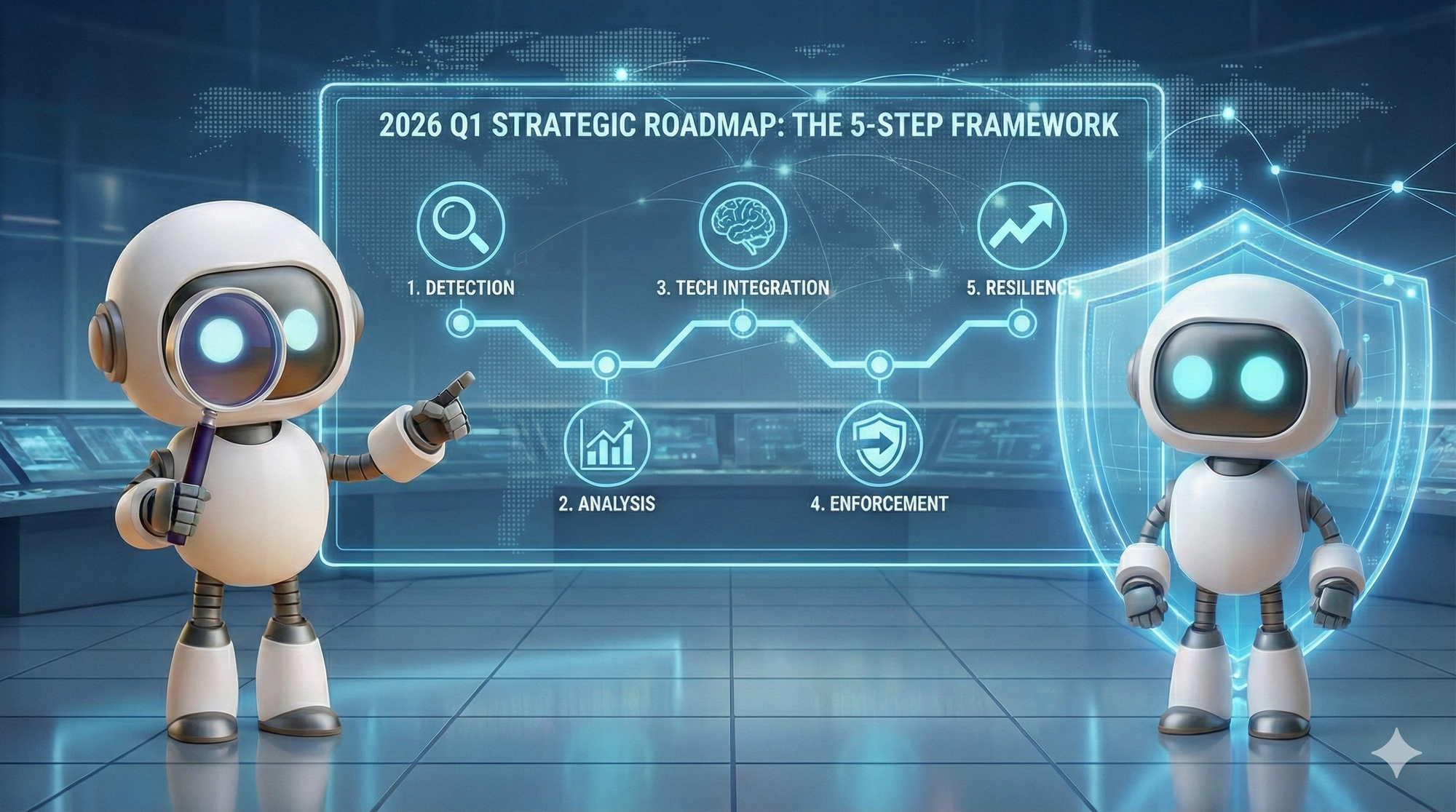
January has set the stage for a critical year in brand security. We have explored how the perimeter of brand protection has shifted from physical assets to sophisticated digital identities and synthetic fraud. This post summarizes our comprehensive 5-Step Framework, providing a clear strategic roadmap for Q1 2026 to detect, disrupt, and build resilience against these emerging threats.
The Month in Review: Mastering the New Threat Landscape
Over the past four weeks, we have dissected the essential components of a modern defense strategy. This journey has taken us from the dark corners of the web to the boardroom:
- Detection & Analysis (Steps 1 & 2): We moved beyond basic keyword searching to uncover the "hidden link" economy on encrypted messaging apps and identify subtle forms of sabotage like review hijacking.
- Technological Integration (Step 3): We addressed the imminent rise of synthetic fraud, preparing brands for a world where deepfakes and voice cloning threaten core integrity.
- High-Velocity Enforcement (Step 4): We defined the new standard for action, shifting from slow, manual reporting to automated evidence packages and API-driven takedowns for real-time disruption.
- Resilience & Measurement (Step 5): We demonstrated how to transform brand protection from a cost center into a quantifiable value driver by measuring "Trust Equity" and calculating the ROI of AI-driven defenses.
- The Human Element (Strategic Deep Dive): We emphasized that advanced technology must be backed by a "human firewall," training staff to recognize and resist highly personalized social engineering attacks.
The Q1 2026 Strategic Roadmap
As we look ahead to the rest of the quarter, the focus must shift from understanding these concepts to implementing them with agility.
- Invest in Agility: The speed at which synthetic threats are generated requires a similarly fast defensive posture.
- Deploy AI-Driven Tools: Manual monitoring is obsolete. Success in Q1 depends on integrating automated detection and enforcement APIs to handle the scale of modern threats.
- Measure What Matters: Move beyond simple takedown counts. Start tracking resilience metrics like market share defense and sentiment stabilization to prove the long-term value of your efforts to stakeholders.
Conclusion
The 2026 threat landscape is dynamic and unforgiving, but it is not unmanageable. By adopting the principles of this 5-Step Framework, your brand can move from a reactive stance to a proactive, resilient posture. The roadmap is clear; now is the time to execute.
References
- Global Risk Report 2026: The Rise of Synthetic Social Engineering.
- Cybersecurity & Infrastructure Security Agency (CISA): Updated Guidelines for Mitigating Deepfake Threats in Corporate Environments (v4.2).
- Journal of Digital Integrity: Watermarking and the Future of Media Provenance (Q1 2026 Issue).
- Brand Protection Council: Annual Survey on Consumer Trust and AI Transparency.